A sermon on 'Reaching out'

Soon afterwards Jesus went to a town called Nain, and his disciples and a large crowd went with him. As he approached the gate of the town, a man who had died was being carried out. He was his mother’s only son, and she was a widow; and with her was a large crowd from the town. When the Lord saw her, he had compassion for her and said to her, ‘Do not weep.’ Then he came forward and touched the bier, and the bearers stood still. And he said, ‘Young man, I say to you, rise!’ The dead man sat up and began to speak, and Jesus gave him to his mother. Fear seized all of them; and they glorified God, saying, ‘A great prophet has risen among us!’ and ‘God has looked favourably on his people!’ This word about him spread throughout Judea and all the surrounding country. Lk. 7.11-17

In the name of the Father and of the Son and of the Holy Spirit. Amen. When I was at school we went on a walking trip to Dartmoor. We had to carry all our camping equipment on our backs and cover thirty miles in three days. At the time I came up to about here. My rucksack came up to about here.

Now one of the problems with Dartmoor is that it is boggy. Huge deep puddles of mud that look this deep but continue down for several feet. Day one we set out, to the hills not long after starting I tried to jump across just such a puddle only to find myself waist deep and heading down under the weight of my rucksack.

My so called school friends stood back and laughed. Once they had wiped the tears of laughter from their eyes however, they did reach out to pull me out. So I am a great believer in reaching out to others and we have an example of this in our Gospel reading today.

The widow of Nain
Our story from Luke this morning starts as a tragedy. Jesus and his disciples are on their way to a small village and coming in the opposite direction is a funeral procession (look). A child has died and his mother, who has already lost her husband, will be left alone. A pretty desperate situation for a woman in 1st. century Palestine.

What do you feel when you hear this story?
Is it a happy story or a sad one?
What is the turning point?

I wonder where Jesus was going? I wonder what he had on his mind? Whatever the answers he takes the time to stop, to see what is going on and…

His heart goes out to the woman…
He has compassion…
His heart broke…

So he goes over, touches the boy and in a miraculous moment, the child is raised from the dead. A potentially tragic situation becomes a cause for celebration and hope.

A Vocation to Compassion
This is just one example of Jesus reaching out to lepers, adulterers, tax collectors, the disabled. People in need, People on the margins. Now, if you think back to our readings over the last few weeks, you will remember that we have heard about the Church continuing Jesus’ work, through the power of the Spirit.

So, if Jesus allowed his heart to go out to others, so should we. If he was called to be compassionate so are we. And if that led him to reach out to others, then we should reach out too. Because, brothers and sisters we are God’s hands and feet in this world to do his will and show his love.

So, as we share the peace today, let us reach out to others with the love of Christ. As we pray our intercessions, let us also listen for what is on God’s heart. And as we go out from here, I invite you to chose someone particular this week to whom you will reach out.

Amen.

Young Londoners prayers

Over the last few weeks I have been working with the youth group at St. George's Camberwell, preparing some prayers. Following a discusion around things that we wanted to thank God for and things that we wanted to pray about the group took disposable cameras out to take photos that would illustrate their prayers. The results are below...


Let us pray for the Church and the world using the response:
God of Love…
Hear our prayer

We thank you for giving us Churches to go to and letting us give thanks to you. We
also thank you for giving us nice buildings to live in and for this Church.
God of Love…
Hear our prayer


Thank you for all our mothers and fathers that take care of us and love us. Thank you also for all the clothes we have.
God of Love…
Hear our prayer

We thank you for this congregation and for our priests. We thank you for the gift of life We are also grateful for our homes and family. We thank you for friends and school.
God of Love…
Hear our prayer

We thank you for giving us wonderful friends who respect and understand us when we are feeling up or down. We also thank you for friends we can have a laugh with. Help us to understand that friends are angels from above.
God of Love…
Hear our prayer

We pray for our Church and good SATS results and we thank God for a great family, a nice school and a lovely world.
God of Love…
Hear our prayer

We remember today people who feel that they don’t belong and for an end to war and poverty in Africa.
God of Love…
Hear our prayer

We thank you for the homes that we live in, for our families and for the love we all share. May we continue to love one another as God loves each and every one of us.
Merciful Father….

A Mission to Somerset

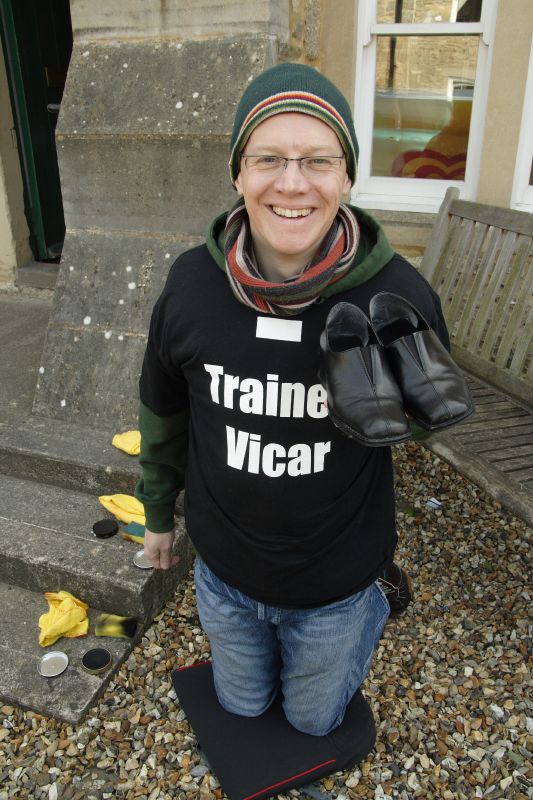
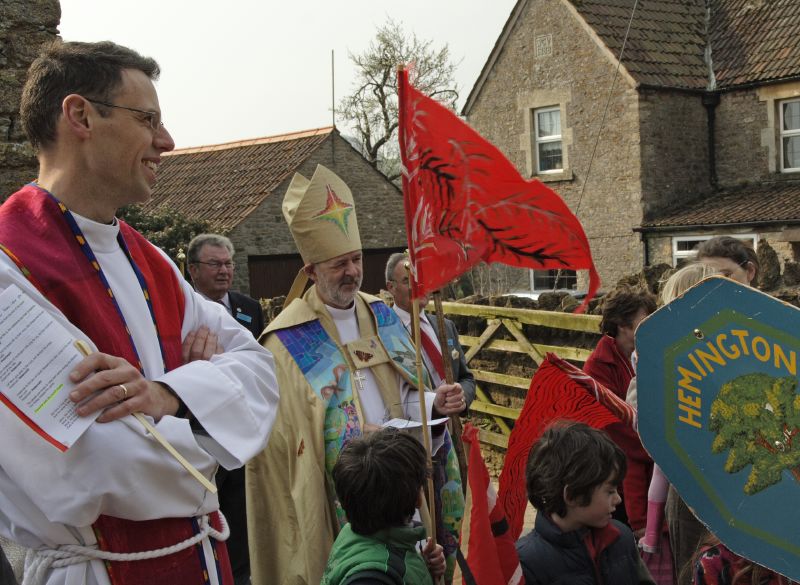
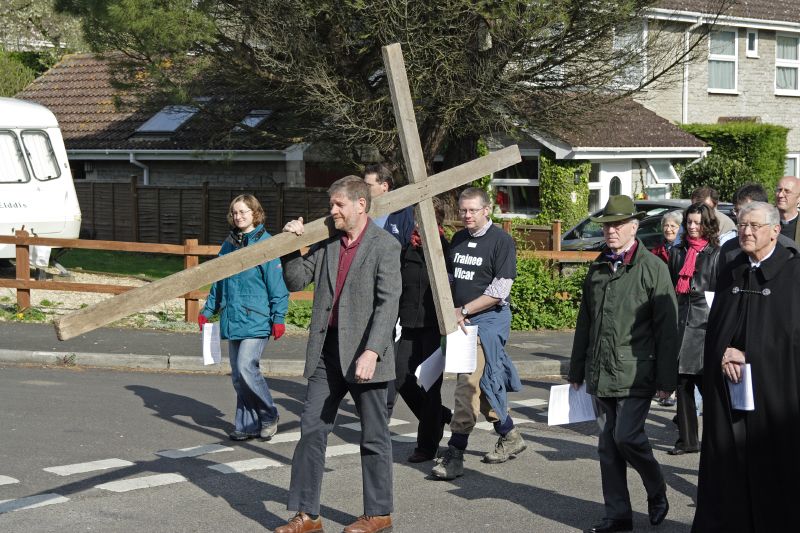
This Holy Week a group of trainee vicars from Cambridge went to the Hardington Vale group of parishes in Somerset to assist with a parish mission. The week involved a sports holiday club, any 'Any questions for God?' evening, Maundy Thursday shoe polishing and preaching at Holy Week services. Here is the sermon that I preached on Easter morning...

Well it’s been quite a week hasn’t it. I wonder what you enjoyed most about the Mission? What did you learn about Easter through those activities? Well I too have learnt things, as the week has gone on.

I‘ve learnt how much energy your young people have. How much you value family and how fattening mission can be as we have been to dinner parties with people in the parish every night this week! So on behalf of all of us from westcott, we would like to thank you for your welcome and hospitality.


It has also been quite a week in our Gospel story as well. If you cast your minds back to Palm Sunday crowds were excited- but everything was on a knife edge. The religious and imperial authorities saw Jesus message of love as a threat to their power. As the week has gone on, things have gone from bad to worse as Jesus was arrested, tried, flogged, paraded through the streets and hung on a cross to die. A terrible end to a life that held so much hope…But, it isn’t the end & that is what Easter is about.

And that brings us to our Gospel reading this morning. We read of the women going to the tomb in sadness and confusion and then finding no body. There are strange heavenly figures telling them that Jesus is raised from the dead and so they rush to tell the disciples…What do you think was going through their head? What do you think that they felt?

So, should we believe these women? Or is this just an ‘idle tale’, ‘nonsense’, wishful thinking! You know what women are like! Well we perhaps ought to at least consider what they say, because they were known to the disciples, they were witnessing to something that they had seen at first hand and as a group their testimony seems to agree.

The question that the disciples must have had is ‘How did Jesus rise from the dead?’ I’m sure that it is the question we too ask. The short answer is that we just don’t know, we were not there. But something happened that meant Jesus’ body could not be found. Something happened that allowed the risen Christ to appear to the disciples in locked rooms and on road to Emmaus. Something happened that turned a scared and bewildered group into a Church that within 300 years had spread across the known world. And something happened that has drawn us to be here today, this Easter morning.

Perhaps we too are a pretty ropey group of followers, perhaps we hope more than we believe and perhaps we are driven more by our fears than by our hopes. But as with the first disciples, this morning the risen Christ is here to greet us. He is here to proclaim that life has overcome death, that love is stronger than fear and that this ‘wishful thinking’ is no lie but is an amazing truth that can liberate us from the lies and nonsense of this fleeting world.

A world which suggests that we are worth no more than we can earn or says that our god is fine as long as he is kept as a Sunday morning hobby. Yet our Easter story proclaims that our God cannot be kept in tomb, put in a box or contained in a Church, even one as beautiful as this!

So brothers and sisters as we greet this festival day, I invite you to be amazed. And to live in the confidence of God’s overflowing love, revealed in Christ. A love that calls us to love one another and put that love to work in the humdrum decisions of our daily lives. And in a small way, that is what we have tried to do in the mission this week.

Now, if you are relieved its all over. I have good news and bad new. The good news is that the crazy ordinands with their odd T-shirts and smelly incense are going home! The bad news is that it is not a Hardington Vale mission that we are involved in but God’s mission to his world. A mission in which God sent his son into the world as a sign of his love and in which we are witnesses to that love as Christ’s hands and feet to do God’s will in the world. As we bring up our children, as we volunteer our time and talents as we consider our work, our lifestyles and the best use of our money. This mission goes on.


So in the words of our Gospel story this morning I invite you, like Peter, to come to this Holy place and meet the risen Christ and to return home amazed at what has happened this week and committed to living this out in our lives.

Alleluia, Christ is risen!

Protesting against Trident


To the tune of St. Denio (NEH 377)
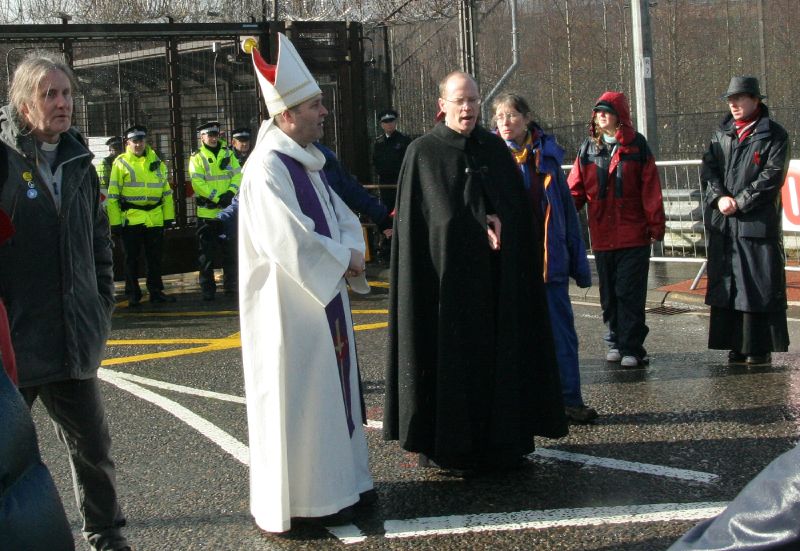
Illegal, immoral, God only knows why-
Our leaders are planning to blow us sky high.
It’s yesterday’s weapon, for yesterday’s war
Now’s time to stop Trident that’s what we’re here for.

Barbaric and evil, this bomb it must go.
The Japanese people will tell you its so.
Flattening houses and burning through flesh
This isn’t just warfare, it’s a global dead zone.

Still loving and hoping, we’ll stand firm in faith.
God’s message is justice and fullness of life.
He flings his arms open, for all on the Tree
Proclaiming forever, that peace is decreed.


Bishop Stephen writes…

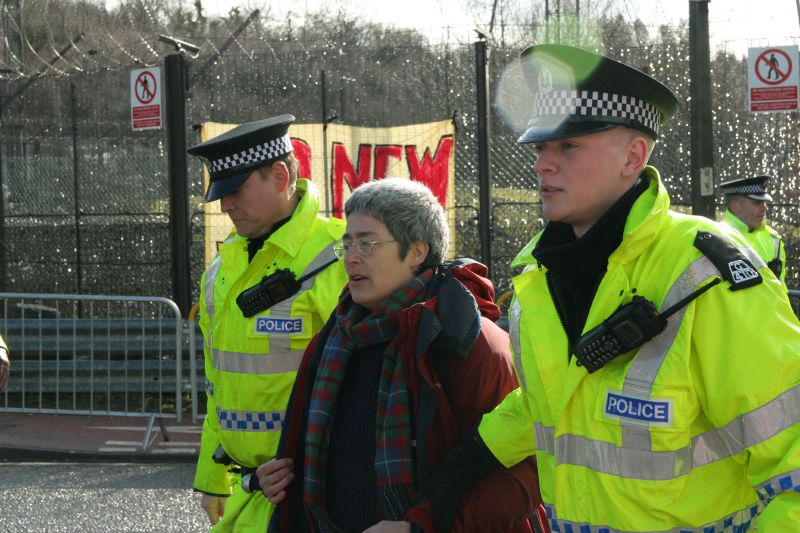
“If I have a line on all this it is that we are simply doing what Christians have always done, that is to pray for peace in the world, for an end to violence, and to offer the Eucharist as a sign of God’s covenant of peace with us through Jesus Christ. In other words, we should not think of what we are doing as brave or remarkable, but as the normal business of the church of God. Indeed it would be strange not to do it.”

Litany for peace

In faith and hope let us make our prayer to the Father
And ask for his grace and peace.


For all victims of war and violence
That you might bind up the broken-hearted,
We pray to you, O Lord.
Your Kingdom come
Your will be done

For all members of the House of Commons and Lords
That they may seek justice, peace and the common good,
We pray to you, O Lord.
Your Kingdom come
Your will be done

For all who work and witness for peace
That they may see swords become ploughshares and spears become pruning hooks,
We pray to you, O Lord.
Your Kingdom come
Your will be done

For your Church and this House
That we might witness to your love in the dark places of the world
We pray to you, O Lord.
Your Kingdom come
Your will be done

Fasting, praying and weeping on Ash Wednesday

Tonight, I want to talk about three things. Ash, Joel and Sin.

Putting ash on your forehead is a pretty odd thing to do. I remember when I was at school and we had a special service for Ash Wednesday which was popular for at least two reasons. Firstly, you got time out of lessons and Secondly, you got to go around all day with a dirty smudge on your forehead. What more could a schoolboy want?

So, where does tonight’s strange service come from? Ash Wednesday and Lent have for centuries been part of the Church’s preparation for Easter. Ash Wednesday used to mark the public repentance of what the prayer book refers to as ‘notorious sinners’ and in years gone by Lent has been used as an opportunity for teaching new believers before baptism. More recently the Church has found that an act of repentance and a special time of prayerfulness and self denial is good for the whole Church as we prepare to remember Jesus’ death and resurrection.

So, as we gather here tonight we are in good company. Not only from the past but also from around the world. Where Christians are using a whole host of differing prayers and actions to remember that we are imperfect and rely solely upon the grace and mercy of God.

Many of these services will be active, noisy and colourful. All characteristics that might well make us feel uncomfortable, in our anglo-Saxon corner of the world. We don’t like to show our emotions, certainly not when it comes to something as personal as faith- God forbid!

However, you don’t have to spend long reading the Bible to see that it is littered with actions that have special meanings; the feast of Passover, the temple ceremony, the odd actions of the prophets, Jesus’ healings, the last supper and the sending out of the disciples to preach and baptise. All of these are ways in which people of faith have used everyday things to worship God. And that is what we are doing tonight. We are using this ash, as a sign of our sorrow before God. As we are invited to fast and pray and weep.

So, let me move on and talk about Joel- our Old Testament reading. Joel was a prophet who lived in Jerusalem around 340 years before Christ and his preaching is driven by a sense of disaster.

Israel had recently suffered a terrible plague of locusts, that had stripped the crops bare and led to a famine. For Joel this was a warning that the ‘Day of the Lord’ was coming.

Now Israel had understood the ‘Day of the Lord’ as the time when the nation would be saved from its enemies but Joel turns this on its head, saying that the Day of the Lord will actually be a day of judgement when Israel will be punished for its rebellion against God. And so we read, ‘Sound the alarm, the day of the Lord is coming, a day of darkness and gloom.’ And in response Joel tells his hearers to fast and pray and weep.

So what has this alarming story to do with us? Have we rebelled against God? Have we been warned? Do we face potential disaster? I believe that the answer to each of these questions is yes. And I am sure that as each of us think about the state of our world we could easily choose examples of inequality, violence and injustice.

The recent shootings of black teenagers in London speak of poverty, broken families and the impact of drugs in our inner cities. Alternatively, earlier this week Christian Aid launched their climate chaos campaign, drawing attention to the catastrophic effect of climate change on poor communities around the world. Meanwhile our government seems keen on spending at least £40 billion replacing our nuclear deterrent. Weapons that destroy cities, killing millions of people and poisoning whole regions for generations to come.

Now each of these are huge issues. But they do all connect with us as individuals. The decisions we make at the ballot box, in the supermarket, with our money and in our relationships all play a part in shaping our broken world. And so tonight we are invited to fast and pray and weep.

I spoke earlier of violence, inequality and injustice. These are all words that appear in the Bible but can be summed-up in one word. Sin. Which bring me to the third theme tonight.

Too often we think of our sins as individual mistakes that we make in our personal lives for which we should say sorry- and we should. But we need to have a bigger understanding of sin. Because whether we like it or not, we are part of world which although beautifully made by God is also affected by sin.

The fifth century Bishop and theologian Augustine called this ‘original sin’. Let me sketch out his thinking. At creation we were given God’s eternal grace. However, because of Adam’s disobedience in the Garden of Eden, we are imperfect and confused within ourselves. Our chief sin is that of Pride in failing to see God as our Creator. And so we are left to be driven by our own selfish desires. In this state of weakness we can only, ‘see through a glass darkly’ and so are led into specific sins.

A feature of Augustine’s thinking is the truth that as well as being personal- sin is also social and structural. Because as imperfect human beings we also create cities and societies that are imperfect. Indeed when you look at our world it is not difficult to see that pride, greed and fear are often powerful motivations.

Joel spoke of the Day of the Lord coming as an army of judgement. As Christians the Day of the Lord comes in Jesus crucifixion where we see God’s judgement combined with his love. And so as we approach Easter we are approaching the Day of the Lord. A day when God doesn’t send an army to the rebellious city- but his Son. A son who flings his arms wide upon the cross as God reaches out in love to his fallen creation.

Now you may not feel that we are all going to hell in a hand cart. You may feel that the chorus of, “We’re doomed, we’re all doomed!” is over the top and that quite tonight all I am doing is rubbing your faces in it.

But the thing is- and this is the important bit- that once we give up desperately trying to be good on our own account- we begin to give God’s Spirit a chance to work in us. Once we realise the seriousness of Sin we can also appreciate the breadth and depth of God’s overflowing love revealed in Christ. Once we stop desperately clinging to God we will realise that he has gently been holding us all along.

So this year, begin Lent by knowing that you will probably break your fast, that you may well not finish your improving book and that by the end of it you will still be dissatisfied with your prayer life. But in God’s gracious economy that is just fine. As Psalm 51 says, “The sacrifice acceptable to God is a broken spirit; a broken and contrite heart, O God, you will not despise.”

And so tonight I invite you to lay aside your anglo-Saxon sensibilities to fast, pray and just maybe shed a tear.

Amen.


With thanks to Famous potatoes for the top photo:
Famous Potatoes.

Stop the guns, South London


Between 3-6 February this year, three black men including a fifteen year old boy were killed in Peckham, south London. Despite huge investment and overall falling crime statistics, Police admit that gang membership is on the increase. Indeed, the latest anti-gun campaign targets 11-16 year olds.

Walking around Peckham, you can see that much has changed in recent years. The area has witnessed one of the largest redevelopment programmes in western Europe. £300 million has been spent on building 2,000 new homes, a sports centre, a leisure centre and an award winning library. New public and private housing stand side by side in attractive cream brick. Wide roads are designed to take tramlines that will allow people to get easily into central London.

Looming over the neighbourhood, however, are huge water towers that once formed part of the notorious North Peckham estate. Designed to separate people from cars, the walkways in the sky soon became unliveable and un-policeable. By the time of the murder of Damilola Taylor in November 2000 the estate was already being demolished. Six years on, Peckham had hoped that it had lost the ghetto image.

However, the events of this month have put Peckham back in the headlines. On Saturday 3 February Javorie Crichton was stabbed to death. The next day Chamberlain Gwemba was shot dead and another man wounded. The following Tuesday, gunmen stormed into the home of 15 year old Michael Dosunmu and shot him dead as he slept. Police suspect this last incident was a tragic case of mistaken identity.

In response, a community meeting was called this week. Over 250 attended with others unable to get in, listening in the car park outside. The meeting was chaired by local community activist, Decima Francis. Decima runs the From Boyhood to Manhood Foundation, hosted by the Trinity College Centre on the Camberwell/Peckham border.

The project has an 80% success rate in reintegrating excluded young black men into mainstream education. Knowing many in the room, she was able to chair the meeting with authority and a prophetic air that allowed her to challenge questioners- “What will you do for Peckham?”

Local people spoke of the two sets of lives being lived in Peckham, hard working day people who take their children to school and go to work- often holding down several jobs. And the night people whose ‘day’ starts at 11.00pm. Decima spoke of her own Pentecostal faith and invited people to pray for Peckham between 11.00 and 4.00. Judging by the response, there were many people in the room that pray.

Whilst a few questioned the Police and some called for investment the comments that gained the most support spoke of the need for good parenting, positive role models and a commitment to education.

“You have to support young people out there in being positive. To be positive about who you are and what you can contribute. I believe in Peckham but you have got to be pro-active with these young people and let them know that they have a positive alterative.”

An older lady spoke of having been burgled as she slept. Seemingly close to tears, she pleaded “I beg the parents to look after their children and pray for them, in Jesus name I pray that they will not go astray. Look after your children!”

A teenage girl said, “Parents- don’t be naïve. Think about what your children are doing. Especially if you are religious, while you are praying your kids are out on the street. Where are the parents? They should be taking an active interest in their children’s lives.”

A mother summed-up the views of many as she said, “It is hard being a single mum and when you have to give your address and people know that you are from SE15 the handbags go away and people look at you differently.”

Reflecting on the recent killings she said, “There but for the grace of God go I and every mother who has a son.”

With thanks to BBC News for background information
Video from stoptheguns.org

Thoughts on the Transfiguration of Christ

Now about eight days after these sayings Jesus took with him Peter and John and James, and went up on the mountain to pray. And while he was praying, the appearance of his face changed, and his clothes became dazzling white. Suddenly they saw two men, Moses and Elijah, talking to him. They appeared in glory and were speaking of his departure, which he was about to accomplish at Jerusalem. Now Peter and his companions were weighed down with sleep; but since they had stayed awake, they saw his glory and the two men who stood with him. Just as they were leaving him, Peter said to Jesus, ‘Master, it is good for us to be here; let us make three dwellings, one for you, one for Moses, and one for Elijah’—not knowing what he said. While he was saying this, a cloud came and overshadowed them; and they were terrified as they entered the cloud. Then from the cloud came a voice that said, ‘This is my Son, my Chosen; listen to him!’ When the voice had spoken, Jesus was found alone. And they kept silent and in those days told no one any of the things they had seen.


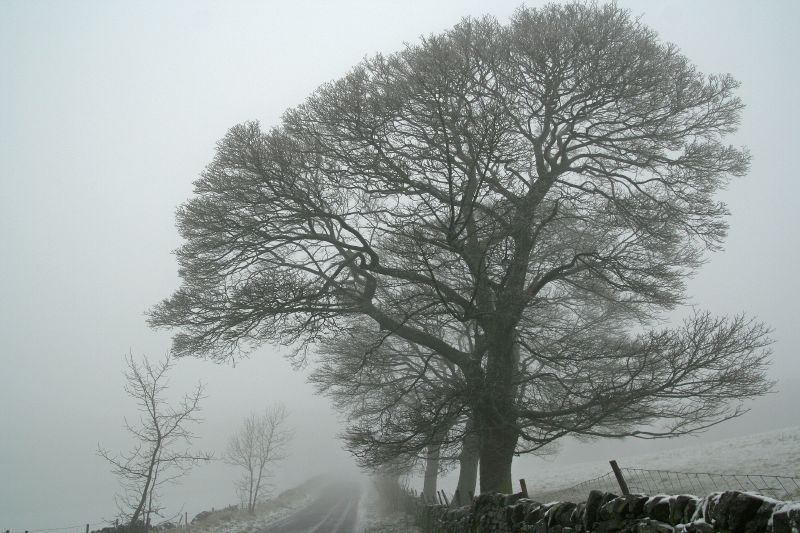
Anyone who has been hill walking will remember the unnerving experience of the mist rolling in. As you plod towards the summit you may fail to notice the clouds descending on distant hill tops. You might even shrug off the darkening sky and cooling air. Too late you look up to discover layer upon layer being added to the mist until hills, contours and trees disappear. Suddenly you are left with the your travelling companions, the damp moss beneath your boots and the gloom.

Your options? Retrace your steps down the hillside, stick to the path and take it slowly or take compass bearings between walkers every few yards. As a challenging Duke of Edinburgh Award trip taught me, a particular trap to avoid is taking bearings on sheep, that have a habit of moving.

The story of the transfiguration is just such an experience of mountaintops, cloud and fear. It is also a story that is far too familiar to us. Indeed, if we are really to enter into this cloud with the disciples, it must again become a strange and disturbing story.

As we ascend this mountain together we stumble over rocks, we wonder where on earth we are being taken and feel ourselves weary from our daily lives. Harder still, having arrived at the summit, we must allow ourselves to be enveloped by this terrifying cloud and to gaze upon the face of Christ as it is transfigured by prayer.

Peter’s response to the scene is a typical example of his misguided enthusiasm. As we shake our heads at his folly we too are presented with the question, ‘what is the appropriate response to glory?’ As an activist I find myself descending with the disciples demanding to know how such a vision can lead to silence? Yet the command from the cloud is not to heal and proclaim the Kingdom as has happened in Galilee but to “Listen to Him”.

The story of transfiguration is an invitation to attentive silent prayer as the proper response to glory. Too often we know that our prayer can be hurried, rote or a grudging act of will. Indeed, this is not an unfamiliar sensation as we here at Westcott approach our Lenten diet of BCP. I am reminded, however, of the story of the Cure d’Ars, quizzing the peasant who silently spent hours in Church. The peasant replies, “I look at him, he looks at me and we are happy together.” The Cure observes that the peasant had learned to pray without breaking the silence of intimacy with words.

At first reading, there seems to be little missionary insight in a mountaintop scene that leaves the disciples dumbstruck. Surely there must be engagement and communication as we involve ourselves in God’s mission? Indeed we can easily be left reeling as we flick through the resources and strategies currently promoted. Like Peter’s offer of DIY, however, we can easily confuse our highest hopes for the otherness of God’s missionary purposes.

As Stephen Cottrell reminds us the only basis for mission is for the Church to be a place of prayer. Through prayer we look upon the face of Christ and discover ourselves to be the beloved of God. The promise of this story is that like Christ our faces too can be transfigured by prayer. So to can the situations that we face as we allow them to be illuminated not by the sodium lighting of our earthly strategies but by the eternal glow of the God’s love revealed in Christ; “Listen to Him!”

Crying Wolf

One of the highlights of travelling in southern Ethiopia is visiting the 2,200 Km. sq. Bale Mountain National Reserve.

We spent two nights staying at Dinsho Lodge and had a great time but could have spent longer. It is a long day's drive from Addis to get to Dinsho as you rise higher and higher into the mountains and the road gets rougher. The Lodge is basic but clean with dormitories set around a large common room. There is a separate kitchen and you need to take all you need for cooking. For the price of 15 Birr you can buy a large bundle of firewood and some good will in getting it lit. I have fond memories of cooking over an open fire, watching the stars come out and listening the snuffling warthogs that hang around by the Lodge. A warm Gabbi (Ethiopian blanket/cloak) and a bottle of malt whisky also help as it gets pretty cold at night!

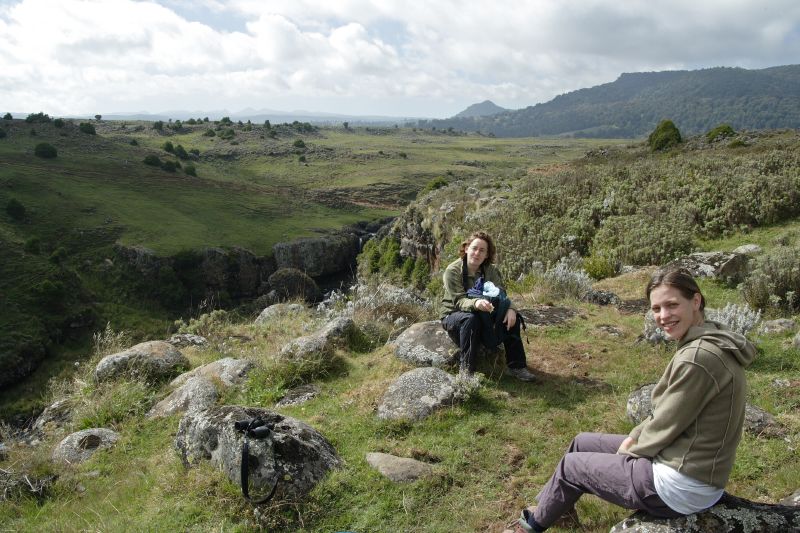
If you’ve not visited the Ethiopian highlands you are going to be in for a shock as dawn breaks. At first glance the scenery looks like Scotland; mountainous, green/grey valleys and a little bleak in places. We made two expeditions in our too short time there, firstly we went walking with a guide through what is known as the Gaysay extension. In a short walk we saw Augur Buzzards, Wattled Ibis and Blue-winged Geese. As we made our way from scrub to a grassland area, the big game appeared; Mountain Nyala, Warthog and Redback deer. Wonderful as they are, however, they weren’t what we came to see.

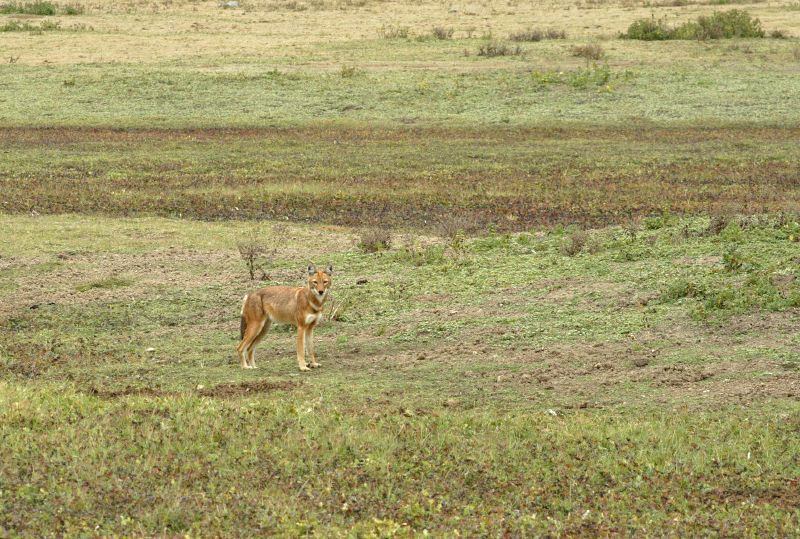
What we were looking for were Ethiopian Wolves (Canis Simensis); the rarest Canid species in the world, only found in Ethiopia and down to a few hundred survivors. This park has the largest population and we hoped to catch a glimpse. Despite us 'Farangi' carrying chunky binoculars, it was our local guide who spotted a Wolf in the distance sniffing the ground and listening for their favourite food Giant Molerats!


From a distance, the Wolf can look Jackal-like or like a lager version of the European red Fox, reddy brown with a distinctive black tip to its tail. We watched it as it moved along the bottom of a hillside about half a kilometre away. Eventually, it moved round to an area under some rocks and I saw an opportunity to put the rocks between us and get closer. I hiked round in a wide curve, trying not to spook the herds of Nyala, crept low over the rocks and popped my head round the edge of a bluff. And there it was, a few hundred metres away and I got a couple of snaps before it moved on.

That afternoon, we travelled along the Web River Valley track that made the road from Addis seem smooth and well finished! Eventually, we got to the end of the road and hiked up to a landscape of low cliffs and shallow valleys pock marked with the burrows of thousands of rodents- prime Wolf country. Sure enough as we scanned the horizon we saw another two pairs of Wolves. My failed attempts at stalking were rumbled by Tawney and Golden Eagles that hid against the low cliffs and flew off as we approached.


One of the Wolves also decided that we had got too close for comfort and in response to a high-pitched yelp we backed off and left this unforgiving landscape to the wild animals that belonged there. If you want to know more about the Wolves visit

Going through Hell


Helen and I have just returned from two weeks travelling in Ethiopia over Christmas.

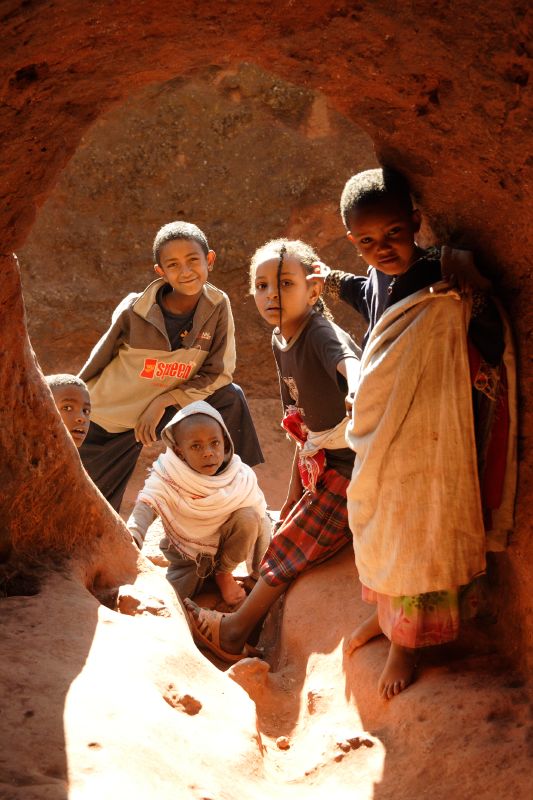
We had a great time, visiting the source of the Nile near Bahir Dar, the ancient rock-hewn Churches of Lalibela and the Bale Mountains where there is the largest population of the world’s most endangered canid; the Ethiopian Wolf.

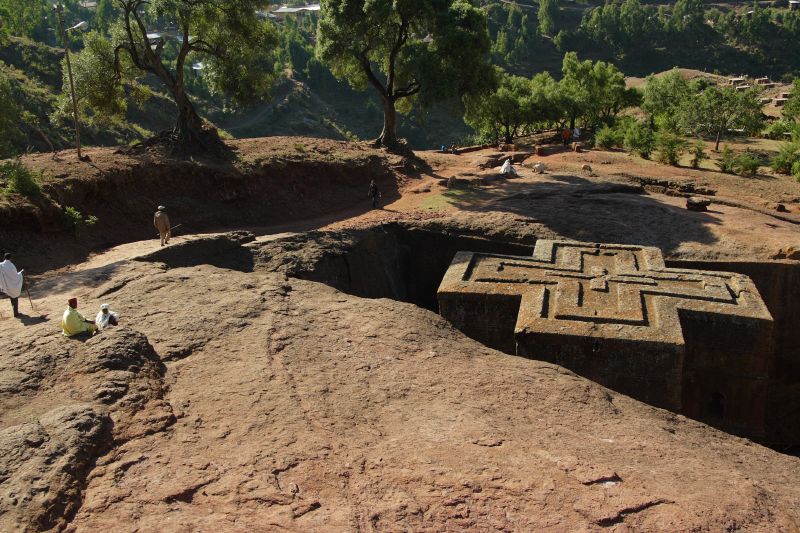
Visiting Lalibela was one of my highlights; a small rural market town high in the Lasta mountains of northern Ethiopia, it is famous for its eleven rock Churches that date back to the 12C. It is named after King Lalibela who, according to legend, was transported to heaven and shown a city Churches carved out of rock and told to build a copy on earth as a new Jerusalem. With the help of angels this is what he did, carving out Churches from single pieces of rock, caves and cliff faces.

I went round early one Sunday morning which is the best time to visit. The morning sun paints the rocks a warm pink against a blue sky. The priests were finishing their services that had started at midnight, chanting ancient songs to the beat of a drum and the chiming of cymbals called sistrum.

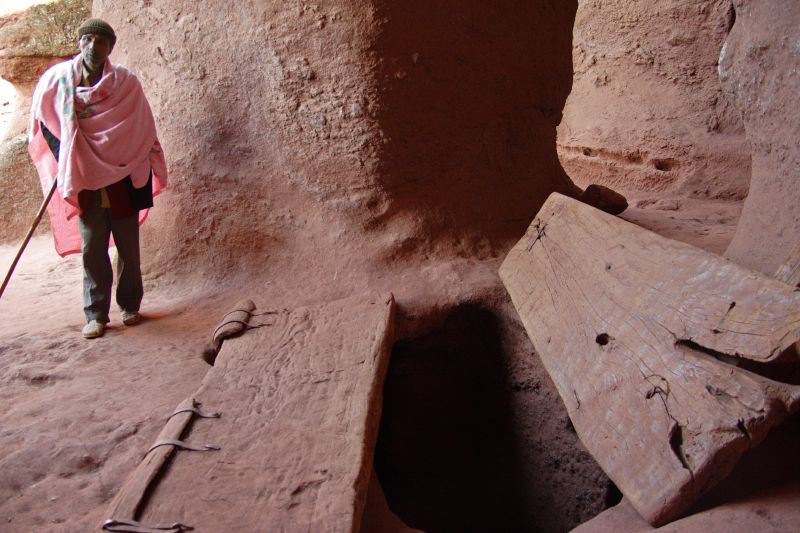
As you scramble round these Churches you walk along trenches, squeeze past rock faces, climb through holes and feel your way along lightless passages.

As I entered one Church, Bet Gebriel-Rafael the priests chanting at the back of the Church made me welcome. Seeing my interest, I was soon presented with a stick to put under my arm to keep me upright for the long service and a sistrum to join in the worship. As I tried to keep time and looked up at this huge chunk of rock formed into pillars, benches, galleries and a roof, I could see countless small chipping marks where it had been carved. It may not have been the work of angels but it was certainly an impressive statement of faith.

Later I continued on my journey through a 50m. tunnel that, along with everything else in Lalibela, has its own special religious significance. This is known as ‘Hell’ and as you stumble through the pitch black you begin to get the idea. The experience became even more surreal when I realised that there were a large group of nuns coming along the tunnel in the opposite direction chanting praises to Christ in the midst of hell.

As they clumsily felt their way past us they continued singing and as they reached the far end and the light began to appear ahead of them, there arose a high and loud ululation of praise. As they still prepared for the Ethiopian Christmas on January 7th, the experience seemed a wonderful present for my own Christmas.

“In the tender compassion of our God,
the dawn from on high shall break upon us,
To shine on those who dwell in darkness and the shadow of death,
And to guide our feet into the way of peace.”