Escaping Giant despair


This month the Church remembers John Bunyan, author of ‘Pilgrim’s Progress’. A book which once was the most popular in the English language after the Bible. Whilst you may not have read it you will probably have some familiarity with it through the hymn, ‘To be a pilgrim’ which begins, “He who would valiant be…”

Bunyan was born in 1628 near Bedford. He lived through the turbulent civil war years and came to faith after years of struggling to reform his life by his own efforts. He joined an independent congregation and became a popular preacher. After the restoration of Charles II in 1606 the authorities feared that radical preaching by unlicensed ministers might threaten the peace of the realm. When Bunyan refused to stop preaching, he was sentenced to spend twelve years in Bedford prison and it was here that he wrote Pilgrim’s Progress.

The Book is prose allegory of the progress of the soul from the city of the destruction to the heavenly city. Our hero ‘Christian’ is accompanied by ‘Faithful’ and ‘Hopeful’ and faces many challenges along the way. One such is when imprisoned in ‘Doubting Castle’ by the ‘Giant Despair’. A situation that Bunyan would have known all too well…
“Now a little before it was day, good Christian, as one half amazed, brake out in this passionate speech, ‘What a fool,’ quoth he, ‘Am I, thus to lie in a stinking dungeon, when I may as well walk at liberty. I have a key in my bosom, called promise that will (I am persuaded) open any lock in Doubting Castle’...and Christian began to try at the dungeon door, the lock was damnable hard but the key did open it and they made their escape with speed and came to the King’s Highway again.”

Prison Chaplaincy

The New Jerusalem- a celestial #riotcleanup

“Seek the welfare of the city, and pray to the Lord on its behalf, for in its welfare you will find your welfare.”

Readings: 

Ps. 55.4-11, 22, 
Luke 19.41-44, 
Revelation 21.1-5.

Hymns: 

'God is our strength and refuge', 
'Dear Lord and Father', 
'We cannot measure how you heal', 
'Glorious things thee are spoken'


Homily

“As Jesus came near and saw the city, he wept over it, saying, ‘If you, even you, had only recognised on this day the things that make for peace!”


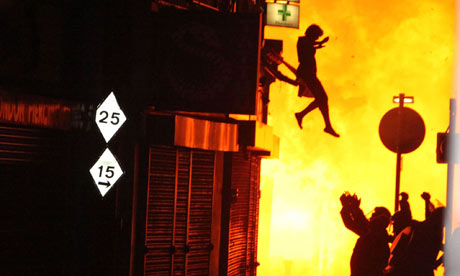
There has been much to weep over this last week. The death of six men, the wanton destruction of homes and livelihoods and the seeming implosion of society in parts of our cities. As I have walked round the parish this week, I have been surprised by how many people have wanted to come up and share their outrage at what has happened, their confusion about what has caused it and their fear at what may come. Friends in Croydon have spoken to me about going to sleep with the smell of burning from the riots and friends in Brixton asked to stay with us on Tuesday night. 
And now in the aftermath we are left to clear-up, to rebuild and to ask how this could have happened in our city just a few miles to the north and south of where we now sit?

Biblical Cities

Cities do not get a good press in the Bible, as our readings this morning suggest. The problems seemed to start with the city of Babel where they acted like Gods and decided to build a tower to reach the heavens. Meanwhile, Sodom and Gomorrah were destroyed for their failure to welcome strangers. Jonah was sent to preach to Nineveh to see if it might turn from its violence and sin. And then there is Jerusalem; the holy city which too often failed to be faithful to God. The city over which Jesus wept, as it failed to recognise its saviour.


We are left to wonder what it is about cities that the Bible disapproves of? Well, at one level, they are places where humanity congregates and so do both our gifts and flaws. These take on social dimensions, allowing us to achieve greatness and to create misery. Despite our proximity, or maybe because of it, cities are also places where we can lose our sense of relationship.


So, in our reading from Psalm 55 we hear of violent speech causing fear, we hear of strife at night time, we hear of sin and ruin and we hear of oppression and fraud in the marketplace.
Tellingly, a similar role call of woe has filled our papers this past week. But as commentators try to pinpoint the one key cause, we may miss the truth that the personal, social, moral and economic are inextricably linked. And that together love, justice and truth are what make for the peace of this or any other city.

The New Jerusalem

But this is not all that the Bible has to say about cities. For, in its final chapters the Book of Revelation offers us a vision of the city to which we are called. A heavenly city that descends to earth. A fantasy city that becomes a reality. 
The new Jerusalem is a city where God dwells with his people- wiping the tears from our eyes and making all things new. This is a city built on relationships, a place of healing and of hope. This is a city centred on the God of love in which all of our relationships have been renewed.

I wonder what such a city would look like? Perhaps there would be no rush hour, perhaps cyclists would be safe on its streets- and would stop at traffic lights, perhaps morning coffee would be free and the parks might go on for ever? I imagine it would be a place of peace and security, of laughter and joy, where great things were achieved.
And I think this vision, or something like it, is what inspired people last week to pick up their brooms and clean up their streets. But building the new Jerusalem will take more than brooms.

To build the new Jerusalem, out of the rubble of this past week will require us to be a people of hope. It will require us to be healers of what is broken in our city and to live our daily lives as if each person we meet is related to us. 
So this morning, I want to invite us to share our hopes and prayers for London. We will do this by writing down hopes, dreams and prayers for our city on post-it notes. We will then share them with one another as we place them on our cityscape at the back of church.  For these post-it notes, these tentative and fragile hopes and prayers for the future of our city, are the building blocks of the new Jerusalem.  Amen.

Prayers for Peace


Join us as we pray for our city and community following recent violence. Our prayers will be part of our Parish Communion service.

Come together, pray for peace, share your hopes


Detail can be found here

A prayer for London


Almighty God and Lord of life,
We pray for the peace and flourishing of our city.
Protect the weak and vulnerable,
Comfort all who have lost homes and businesses,
Protect and guide the emergency services.
Strengthen our community,
we pray through Jesus Christ
The Prince of peace.
Amen.

From the upper room to choral eucharist


Our reading today offer us three experiences of worship; Isaiah’s vision in the Temple, Paul’s report of the Eucharist in Corinth and Luke’s account of the last supper. To a greater or lesser degree these readings are familiar to us. What is less familiar is how we get from these readings to the worship in which we are sharing here this morning.

What I would like to do this morning is take you on an imaginary journey, a kind of time machine if you like which will take us to five differing services down the ages to show us how the past has influenced our worship today. Our journey starts in Jerusalem and will end here.

We begin our journey in an upper room in Jerusalem AD30. The disc are gathered with Jesus as he celebrates the Passover. He takes bread and wine, give thanks to God, blesses it and hands it to each of them. But as they listen to his words something different seems to be happening. It seems that this is no longer a meal remembering their liberation from Egypt instead Jesus says that this is his body and blood given for them. And tells them to do this in remembrance of him.

Our time machine now takes us to the year 100 and to the city of Ephesus on the Turkish coast. We are in the house of Justin the philosopher together with thirty other Christians or followers of the way. It is Sunday morning and they have come in secret, fearing persecution. They read some scripture, one person gives a talk encouraging his hearers to live Holy lives, they stand to pray together, sometimes with their arms raised, they share the kiss of peace and then we bless and share bread and wine. And somehow they know that Jesus is still with them. 


We now move onwards to the year 300 and to the new city of Constantinople, modern day Istanbul. The Roman Emperor has converted to Christianity, named this city after himself and filled it with magnificent Churches.  A Roman general Flavian stands below the dome of a Church dedicated to peace. Its first time he has been here and he sees a priest wearing Imperial style robes, walking in procession, led by someone carrying incense and he knows that he is witnessing something new, important and possibly something Holy. Intrigued by this new imperial religion we watches the service and hears the Lord’s Prayer, he hears a Jewish synagogue prayer that begins ‘Holy, Holy, Holy’ and he hears the words spoken by Jesus on the night that he was betrayed.

Over the coming decades, across the Roman Empire Churches are being built and differing types of Eucharistic prayers are developing. In the east the prayers emphasise the work of the Holy spirit. In the west they focus on Jesus words at the last supper. Over time to heighten the sense of reverence, altars are moved away from the people, screens are put up to protect the Holy space and ordinary people take communion less frequently for fear of not being worthy.

Our time machine now takes us to London, the year is 1408. We find ourselves in a new Chapel on the south bank of the Thames next to the Priory of St Mary. The poet Laureate John Gower has just died. He was rich and has paid for a priest to celebrate mass in his memory and in hope of securing his place in heaven. The priest prays in Latin but few attend, those who do are engrossed in their private prayers but look up to worship Jesus present in the bread when a bell is rung. As this priest holds the bread high he prays that John Gower may be spared the fires of hell. Gower’s tomb can still be seen in Southwark Cathedral.

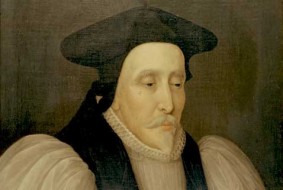
Our time machine now takes us forward to 1618 but has only moved us to the other side of Southwark Cathedral. Here lies the tomb of Lancelot Andrews post Reformation Bishop of Winchester. He has much influenced by Calvin and was one of the chief translators of the King James Version. Like other reformers Andrews was keen for worship to be in English, for Scriptural reflection and long sermons. During his time the Church adopted more simple ceremony and rejected the idea of the Eucharist as a new sacrifice to God. As he celebrates Holy Communion at the High Altar Bishop Andrews stands to one side, so that the people can be assured that there are no hocus pocus or strange Roman practices. The expectation was that lay people would receive communion at least three times a year with Matins and Evensong being more common. 


Finally our time machine bring us here to south Dulwich. The year is 1868 and the Bishop of Mauritius (deputising for the Bishop of Winchester) is consecrating this Church, a fine example of Victorian neo-gothic. It’s architecture aims to focus the eye on our high Altar but its worship led by the first vicar Rev. John Meek Clark continues the tradition of Morning prayer. If we were able to watch the changes here since that service, we would see subtle changes to the worship influenced by changes across the Church of England.

Over the last hundred years there has been greater study of early Christian worship, greater agreement between differing denominations and from 1950s onwards the Eucharist has become the main act of worship in much of the Church. New Prayer books in 1928, 1980 and 2000 sought to modernise language, to involve the congregation in more of the prayers and to rediscover ancient biblical symbols and actions. One of the results for St Stephen’s has been that in the 1990s some pews were removed, these steps were created and the nave altar was introduced, meaning that the priest is not only is closer to the people and faces them.  Now our time machine has run out of energy and you may have as well! And I’m sorry if our journey has left you dizzy! Let me finish by recap on how this history has shaped what is happening here this morning.  We are here following Christ’s command at the last supper to do this in remembrance of him. The gestures I make and the words I say in the Eucharistic prayer come from Jesus own actions of taking, thanking, blessing and breaking bread.

Our readings, sermon and sharing of the peace come from ancient Christian practice, the chasuble I am wearing comes from the days of the Roman Empire, the Sanctus we will sing comes from Isaiah’s vision in the temple, our range of prayers through the year reflect the differing insights of Orthodox, catholic and reformed theology. Our focus on Scripture and the importance of the sermon comes from the reformation and our Nave altar returns us to the early church experience of the Eucharist as a community gathered around a table for a Holy meal. At its best our worship takes us back to the upper room, draws on the riches of the past and offers us a vision of Glory. And that hope is the basis of a prayer I often use in the vestry before the service. A prayer with which I now wish to close.

Let us pray:
Be present, be present Lord Jesus our great high priest
and make yourself know in the breaking of the bread
as you were to the first disciples.
Amen.

The Gospel of Harry Potter


The other day I went to see the latest Harry Potter movie. Like the other seven, it is a lot of fun with dragons, goblins, snakes and adventures aplenty as Harry, Ron and Hermione battle against ‘you-know-who’.

Over the last thirteen years, I have enjoyed Harry Potter, taking the books on summer holidays and then enjoying the films. Whilst some Christian groups have suggested that the exploration of wizardry and magic is dangerous, it strikes me as a fairly harmless yarn exploring good and evil.

In the last book, ‘Harry Potter and the Deathly Hallows’ the battle focuses on Harry’s need to find and destroy ‘Horcruxes’. These are valuable objects in which his nemesis, Voldemort, has hidden parts of his soul in an attempt to live forever. Now I don’t want to ruin the story but three characters die, two of them willingly laying down their lives for a greater good. One of them, however, comes back to life- thanks to the Resurrection stone.

Now these books are not aiming to tell a Christian story and Harry Potter is no Jesus Christ but the books do deal with many Christian themes including the need to name that which is evil, the power of self-sacrifice and the nature of eternal life. As Jesus approached his own death he explained to the disciples, “Those who want to save their life will lose it, and those who lose their life for my sake will save it. What does it profit them if they gain the whole world, but lose or forfeit themselves?”

In the world of Harry Potter this is a truth that Harry begins to comprehend but it is one that Voldemort, to his cost, never understood.

Feeding the hungry...


This Sunday we are having a retiring collection for the joint Disaster Emergency Committee (DEC) East Africa appeal. 

The UN recently declared this crisis as ‘famine’ and estimate that 10 million people across Somalia, Kenya and Ethiopia are at risk of starvation.  Many of those are pastoralists and nomads whose animals have died because of the drought and who now are reliant on aid.

The region is poor and unstable with civil war in Somalia turning drought into famine.  The UN are currently trying to negotiate safe passage for aid workers to get to those worst affected.  Having learnt from past emergencies in the 70’s and 80’s aid agencies now operate a famine early warning system and it is this that is worrying them about the deepening of this crisis over coming months.

The DEC has expertise in emergency relief, bringing together many of the UK agencies including Christian Aid and Save the Children.  In 1995 I was working for Christian Aid and was seconded for nine months to work in a Rwandan refugee camp in Central Africa.  The camp was home to 140,000 people living in tents made of plastic sheeting. 

Each day lorries arrived from Mombasa port with supplies of maize flour, cooking oil and high protein biscuits.  Each day heads of households came to collect supplies for the week.  Meanwhile, British government water tankers filled huge reservoirs and OXFAM pipelines sent the water around the camp.  This is what our donations can do on the ground and how they keep people alive when all else has failed.

An ancient Communion prayer over the bread and wine declares, “Blessed be God, who feeds the hungry, who raises the poor, who fills our praise.”  Amen.


The way, the truth and the life


"Jesus said to him, ‘I am the way, the truth and the life".  This iconic claim, reported in the Gospel of John are words which have echoed down the centuries. 

They are words which cut to the heart of the truth claims of our faith. Claims that Christ reveals the truth, most particularly the truth about God.  These are claims which are hotly disputed, not least by some scientists and this morning I would like to spend a little time exploring with you the current conversation between science and Christianity.

I want to begin with Professor Stephen Hawking who last week gave a lecture entitled, ‘Why are we here?’ In it he declared that, “The brain is a computer which will stop working when its components fail.” He went on, “There is no heaven or afterlife for broken down computers; that is a fairy story for people afraid of the dark.”

Such issues of the afterlife, belief and truth loom large in our Gospel reading this morning. Indeed, the word ‘belief’ occurs five times and the doubts are offered by Philip who wants to see a vision of the Father and that patron saint of doubters, Thomas, who wants to know the way to the Father. Underlying both of these enquiries are questions about the afterlife.

This passage is part of Jesus’ long farewell to the disciples. In it Jesus explains that he is the full and complete revelation of God and that through him the disciples are able to share in the eternal life of God. It contains one of John’s great “I am” sayings which are designed to get us to sit up and take note as Jesus says, “I am the way, the truth and the life.”

This is also a passage that may be familiar to us from funerals. In it we hear that, “In my Father’s house are many dwelling places. If it were not so, would I have told you that I go to prepare a place for you.”  I presume that it is just this kind of passage that Professor Hawking would dismiss as a fairy tale.  But just because it is comforting, does not mean that it is untrue.

Dawkins and the current debate

Professor Hawking is one of a number of scientists publishing popular books denying the truths of Christianity. However the best known of these is Richard Dawkins who is professor for the public understanding of science at Oxford University. Despite this seemingly objective role, he says that he wishes to convert the religious to atheism.

In his book ‘the God Delusion’, Dawkins pulls no punches. He describes God as a “psychotic delinquent invented by mad, deluded people”. Instead he argues for an evolutionary understanding of faith. Once we believed in many Gods, now the main world faiths promote just one God and so his logical next step is to dispense with this last God as an infantile, irrational and improbable idea.  For him religion is a global evil, inspiring fanatics to fly planes into tall buildings. Instead he encourages his readers to embrace a godless future in which he says there is “no design, no purpose, no evil, no good, nothing but blind pitiless indifference.”

Dawkins extreme views have come in for much criticism, not only from theologians. Fellow scientists have accused him of ranting and a lack of scientific discipline. Meanwhile atheist philosophers have criticised him for a failure to study Christianity or to engage seriously with its ideas. Leading to what they describe as, “silly, grotesque and immoral claims”.

In counterpoint to Dawkins stands another evolutionary biologist Dr. Francis Collins. He led the Human Genome Project and recently wrote a book entitled, ‘the Language of God’, which reflected on this work. In it he speaks of a richly satisfying harmony between religious and spiritual world views and suggests that the wonder and order of nature point towards a creator God.  My last scientist this morning is Nobel prize winner Sir Peter Medawar who suggested that the natural sciences, far from providing the answer to everything, have their limits. Whilst they excel at exploring the organisational structure of the material universe, he suggests that they are a poor guide for transcendent questions such as, ‘how did everything begin?’ and ‘what are we here for?’

"What is truth?"

I cannot hope to do more than touch on the surface of these arguments this morning and I am no scientist. But several things seem clear.  Firstly science does not disprove God, though suggesting it has- does sell books.  Secondly, there are fundamentalists on both sides of this debate who prefer to shout rather than listen to one another.  Thirdly, there is a quiet common ground between the natural sciences and theology where people of good will are seeking after truth and we would do well to welcome and embrace this shared endeavour.

By way of a conclusion, I want to end where I began, with Jesus’ proclamation that he is ‘the way, the truth and the life’. A response to the disciples intellectual questions through which Jesus invited them to go on a journey with him.  It is clear, here and elsewhere in the Gospels, that Jesus claims to reveal universal truths. Truths about humanity, our beginning, our end and most importantly about God. But it is equally clear that these are truths which science can do little to test.  Rather Jesus seems to be saying that the best way to test the Gospel is by making it a way of life. And as we walk in this way and live this life- so we will discover the truth of what he said.  This, I think, is what Jesus meant when he said, “I am the way, the truth and the life.”  

Unfortunately, like Richard Dawkins and Stephen Hawking- I cannot prove it.  Amen.

Football, Africa & red envelopes


To mark Christian Aid Week our youth club will be watching Africa United, before being sent off with little red envelopes!

The secret of leadership


With our political leaders getting used to the new landscape after the recent elections, leadership styles are once again under the spotlight. Should Nick Clegg flex his muscles, is David Cameron allowed to gloat and has Alex Salmond’s charisma won out over policy?

Leadership is not only a concern of politicians, it is also something in which the Church is interested. Indeed last week I had to write an essay on the subject as part of my ongoing training. I began by reading Jim Collins ‘Good to Great’ which has now sold over a million copies. Here I thought that I would get the latest insights into tough minded, ambitious leadership. What I discovered, however, was quite different.

Collins rejects heroic, macho models of leadership. Instead, his research shows that the leaders of great companies, are self-effacing, quiet and possess a compelling modesty. Another writer Joseph Badaracco agrees, saying that leaders require modesty, restraint and tenacity. Their thoughts chime with those of Robert Greenleaf who taught at MIT and Harvard. His beast seller is entitled, ‘Servant Leadership’ and reflects upon a career in AT&T. He suggests that the leaders of the future will be ‘servant leaders’ who display an unlimited liability for others, enable those around them to flourish and commit themselves to rebuilding community.

This wasn’t what I expected to read from the bastions of Anglo-Saxon corporate culture. That is not to say, however, that this approach is new or unfamiliar. For this is a leadership style we read of in another bestseller. A book about a world changing leader who told his followers to serve others, who washed their feet and eventually laid down his life for his friends.