I think the puppets speak/sing for themselves


Christmas preparations
 |
| Health advice at the Manna Centre |
Today is Advent Sunday, the Church’s new year, when we begin to prepare ourselves for Christmas. But don’t worry you do not need to rush home to update the Christmas card list or book the Turkey delivery quite yet.
Instead, what we are encouraged to do during this period is to prepare ourselves spiritually. Indeed Advent is to Christmas, what Lent is to Easter. It is a time of reflection, repentance and preparation for the coming of Christ. Over these next few weeks our readings will tell us of those who longed for the Messiah and we will pray and sing of our desire that ‘the heavens may drop down from above and the skies pour down righteousness’.
Another of our Advent traditions here at St Stephen’s is to support the homelessness appeal of Churches Together in Dulwich. Last year this raised over £6,000 for projects across the Borough and this year many of them are reporting more and more clients coming through their doors.
This year we will have a special collection at our Carol service but you can also place a donation in an envelope marked Advent Appeal on any of the coming Sundays and put it in the collection plate.
There could be few better ways to prepare ourselves to greet a child who was born in a manger and who grew-up to be an adult who had nowhere to lay his head.
When Assemblies go wrong...
So excited that Rev is back on tonight. BBC2 9pm. Note to self; must finish standing committee meeting early...
Cheltenham Top 10?
Really pleased that we have been able to announce this morning my appointment as Team Vicar in Cheltenham serving St Philip and St James and The Church at Warden Hill.
http://www.saintspjleckhampton.org.uk/pages/default.asp?Sec=1
http://www.tciwh.org.uk/
Wondering what the best things are about living in Cheltenham?
All comments gratefully received!
http://www.saintspjleckhampton.org.uk/pages/default.asp?Sec=1
http://www.tciwh.org.uk/
Wondering what the best things are about living in Cheltenham?
All comments gratefully received!
For all the saints...
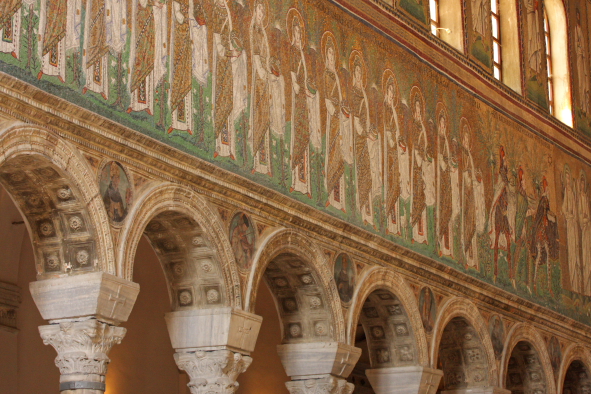
Last summer I had the opportunity to visit Ravenna in northern Italy and to see their famous Byzantine mosaics. One of the highlights was going to the Basilica of San Apollinaire Nuovo.
This beautiful 5C. Church is lined with shimmering golden mosaics of the Saints. Near the altar is an image of Christ in the arms of Mary, flanked by angels. Beside them the three wise men bow down offering their gifts. Behind them stretches a long line of saints and martyrs robed in white that extends the full length of the Church. And it is this procession which we celebrate today.
Without these saints, we would not be here today. There is St Peter who always seemed to get it wrong but who led the Early Church. Mary Magdalene who ran to tell the Apostles the Good News on Easter Day. Stephen, the first to die for the faith. Paul who brought the good news to the gentiles. St George and countless others who died in defence of a persecuted minority religion. Augustine of North Africa who clarified the faith in the melting pot of Greek religions. Patrick and Columba who brought the good news to these shores. Augustine, the first Archbishop of Canterbury.
Catherine of Sienna, Julian of Norwich and Teresa of Avila, overwhelmed by the love of God. Francis and Clare who renewed the Church when it’s faith had grown cold. Cranmer and Ridley martyred during the Reformation. Nicholas Ferrar and George Herbert living quiet lives of holiness in rural parishes. Wesley and Newman leading revivals in the Victorian Church. Octavia Hill and Lord Shaftesbury, reaching into the slums of south London. Bonheoffer, Martin Luther King, Oscar Romero and Mother Theresa who have shown us the cost of faith in our own times. All of these have their place in that procession and we should give thanks for them this morning.
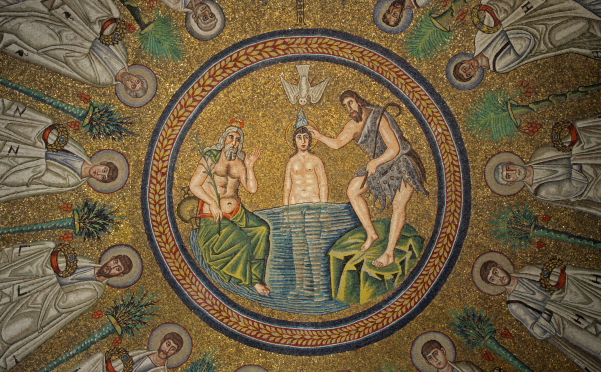
But this great procession stretches yet further. For behind them stand others. Others saints who seem a little confused. Saints who are dressed in their white baptismal robes yet sometimes wander from this procession.
These, it seems, are a work in progress. Saints in the refining who cannot quite believe that they should be called children of God- and yet that is what they are. This slightly rag tag end of the procession come in all shapes and sizes, from every language and nation. And if you want to know what this strange bunch look like, at the end of this mighty procession, you need do nothing more than look around you this morning. Amen.
To be a pilgrim
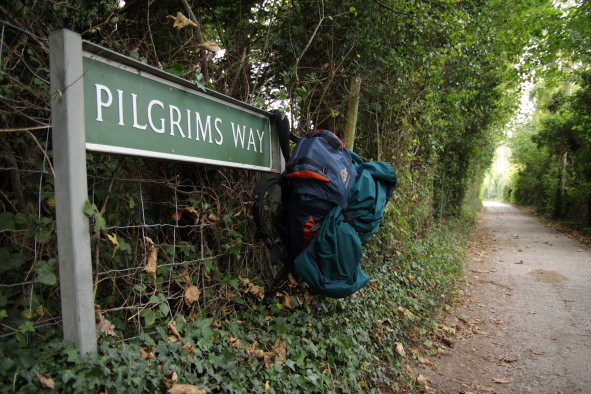
I had wanted to hike the Pilgrim’s Way for many years. I had walked sections of it before but wanted to commit to something longer and, hopefully, more prayerful. I had vague recollections of the Canterbury Tales from English lessons and liked the idea of long days of walking followed by evenings beside a roaring fire.
My first day’s hike was a mere nine miles. Walking along green lanes, spotting buzzards and a dormouse, I imagined myself alongside one of Chaucer’s characters. But the ever-present sound of the M2 and the passing Eurostar reminded me that much has changed. I was making for the Carmelites at Aylesford where I was spending the night. This peaceful Friary, built of flint and thatch, nestles in a bend of the Medway. I arrived in time for evening prayer, a hot bath and some simple food.
 After a Eucharist the next morning, I set out eastwards along the North Downs Way. Chaucer’s pilgrims may well have followed the route of today’s A2 and the ‘Pilgrim’s Way’ marked on our maps owes more to Victorian romanticism than medieval archaeology. Nevertheless the views south from the downs, are a great backdrop for prayer. Eventually, as dusk fell and after seventeen miles, I arrived at The Oak at Charing. Achey and sweaty I stumbled into the bar to be greeted by curious stares.
 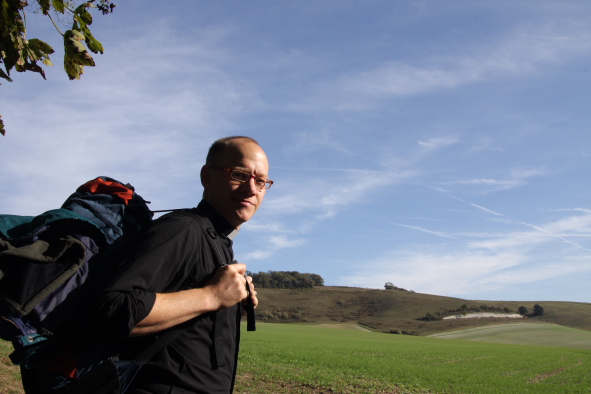 My final day’s walk brought blue skies, skylarks and yellowing poplars. Unfortunately, I also had another seventeen miles ahead of me. As I turned north-east at Boughton Lees, however, I had a sense of being on the last leg.
 Walking through King’s Wood, south of Chilham I met a mountain biker who asked me what it was in aid of? I tried to explain that I wasn’t raising money but going on a pilgrimage. Finally, I arrived in Canterbury and made my way to the Franciscan Friary for a hot bath, a meal with pudding (as it was a saints day) and prayers for a peaceful night which were duly answered.
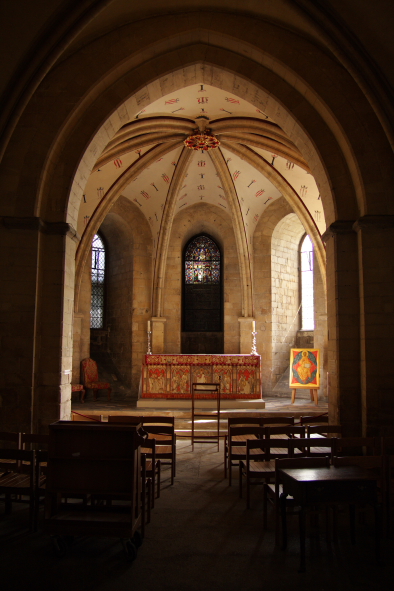
The next morning I headed for the Cathedral and spent time praying in the ancient crypt. It was here that Thomas a Becket’s body was first laid to rest after he was killed by four of Henry II’s knights. It was this martyrdom and the miracles that followed which made Canterbury one of the most important centres of pilgrimage across Europe.
 For medieval pilgrims the journey promised indulgences. For me the benefits were less exalted; an opportunity for walking, the appreciation of nature, a chance to pray and reflect and meet some interesting people.
 And maybe the sight of a priest walking an ancient pathway, might just have reminded people that pilgrims still exist.
Humbling death
At St Stephen’s this year, we will have two opportunities to do this. The main one will be our Choral service of All Souls at 6pm on 6 November (see notice inside). We will also, however, be marking the actual day of All Souls’ at our midweek Eucharist 9.45 Wednesday 2nd. November.
This memorial is an important opportunity to remind ourselves of our Easter faith which proclaims that Christ has conquered death and opened to all the way to eternal life. This paradox and good news was captured well by my favourite poet John Donne in his tenth Holy Sonnet.
Death, be not proud, though some have called thee
Mighty and dreadful, for thou are not so;
For those whom thou think'st thou dost overthrow
Die not, poor Death, nor yet canst thou kill me.
From rest and sleep, which but thy pictures be,
Much pleasure; then from thee much more must flow,
And soonest our best men with thee do go,
Rest of their bones, and soul's delivery.
Thou'art slave to fate, chance, kings, and desperate men,
And dost with poison, war, and sickness dwell,
And poppy'or charms can make us sleep as well
And better than thy stroke; why swell'st thou then?
One short sleep past, we wake eternally,
And death shall be no more; Death, thou shalt die.
Murmur in the Cathedral

Over the last few weeks we have seen a group of anti-capitalist protestors managing to close the doors of St Paul’s Cathedral for the first time since the blitz.
On Monday, I went to have a look and found one of the most organised demonstrations that I’ve seen in a long time. Musicians sang protest songs, others gathered for seminars and tents huddled around St Paul’s made it look like a festival. Yet pathways were clear, bins were being used and everyone was very friendly. Each evening they have an open meeting on the steps of St Paul’s with speakers getting agreement from people waving both hands or disagreement signalled by making a cross with their forearms. As I sat there, they debated whether to make the camp an alcohol free zone.
Now depending on your point of view, this lot are either a reminder of unfinished business in the city or a self-righteous blot on our ecclesiastical heritage. Whichever is true, they are certainly something of a headache for my colleagues at St Paul’s.
One of the particular aspect of this which interests me, however, is that such a debate is happening within the shadow of this great cathedral and on some of their land. When so much of our public squares are actually privately owned, the space for grass roots events and legitimate protest shrinks ever further. It is particularly sad that these events have led to the resignation of one of my more thought provoking colleagues. We will now need to see what the future direction is of the Dean and Chapter.
It strikes me however that, in the midst of the city, St Paul’s ought to do all that it can to leave the door open to such an important debate.
Interfaith dialogue c. 1800

On Wednesday this week the Church will remember Henry Martyn,
translator of the Scriptures and missionary in India
and Persia. Martyn was born in Truro in
1781 and studied at Cambridge. He was planning to go into Law but at
University had undergone a conversion experience and instead was ordained as a
Priest.
Martyn had an impressive gift for languages and a desire to
serve in the mission fields of the growing British Empire. At the time, however, the British East India
Company discouraged mission work for fear of offending Hindu
sensibilities. Nevertheless, Martyn
eventually got a post as Chaplain to the Company and sailed for Calcutta in 1805. When he arrived, he spent much time debating
matters of faith with Muslims and Hindus.
He also put his language skills to use and in just six years he
translated the New Testament and the Book of Common Prayer into Urdu and
Persian. Sadly by 1809, he was suffering
from tuberculosis and eventually died on 16 October 1812.
When I was studying in Cambridge,
I often used a library now dedicated to his memory and had time to reflect on
issues of Christian mission and dialogue between faiths. I find it interesting to note that then as
now, it is often states and businesses that worry more about the possible offence
of religion than the religious themselves.
In our ever more globalised society where faith and cultures
meet every day it strikes me that we need more dialogue rather than less. But, as Martin discovered, for such dialogue
to be worthwhile we may well need to travel well beyond our comfort zone and to
immerse ourselves in the culture of others.
Demons, devils & our defences

A homily on Joel 1.13-15, 2.1-2 & Luke 11.15-26
When I was a child, my father used to take us on tours of Castles. Indeed, somewhere I still have souvenir badges from Caerphilly, Corfe Castle and other ‘educational’ ruins. As we plodded round, often in rain, dad would read from the guidebook in an embarrassingly loud voice. I meanwhile spent my time on the battlements, imagining myself keeping watch for advancing armies, straining my eyes to work out how far I could see. This role of watchman on the city walls is one of a number of images of battle and warfare in our somewhat unsettling readings this morning.
In our Old Testament reading, the prophet Joel tells us of a watchman who sees dust rising from a great and powerful army advancing on the city. He blows the rams horn to alert the people that disaster is near and tells them to defend themselves with prayer, fasting and lamentation.
Meanwhile in our Gospel reading, it is not a city which is besieged but a human soul. Jesus has just cast out a demon only to be accused of being in league with lord of all demons, the Devil himself. Jesus replies by poking holes in his accuser’s argument and explains that these healing, rather than being the work of the devil, are in fact a sign that the Kingdom of God has come close. He concludes that those freed from sin must defend themselves against falling prey once again to the devil.
Such talk of demons, devils and spiritual possession might well feel odd to us today. But whilst we may not fear disembodied spirits, we certainly all wrestle with our own inner fears and obsessions. Those thoughts which wake us in the small hours of the morning or the lies we end up believing, when feeling low. These are our own latter day demons. And we too need to guard against them.
Let me return, for a moment to our Gospel reading because in the middle of this Jesus offers us some context to understand this bizarre world of spiritual warfare. And he does so by telling the story of the strong man whose castle is plundered. But the cast of this story may surprise us. For the strong man in question is in fact the devil and the one who takes his armour and plunders his goods is none other than God.
But Jesus does not want to tell us of some distant heavenly battle but rather he wants to reveal to us something about himself. For this spiritual burglary is the work of Christ who brings God’s Kingdom close in his incarnation and who conquers death and hell through his resurrection. And the punch line to this parable is the most surprising bit of all. And it is this- we are the plunder who have been freed from the devil’s clutches.
So, having been freed, at so great a price, how do we stop ourselves being spiritually repossessed, how should we keep watch over the battlements of our own spiritual city? Well Joel called for prayer, fasting and a gathering in the Temple. For us gathered here today, modern equivalents might be a pattern of regular prayer, a commitment to simple living and taking on an active role in the life of the church.
But such activities are only a means to an end. And that end is to know that in Christ the Kingdom of God has come close and that this is the Kingdom, the city, in which we now dwell. A city whose walls are the faith which we share, a city whose currency is hope and whose export is love. And the more we know ourselves in our heart of hearts to be citizens of this city, the stronger our defences will be. Defences against our inner demons and all that would deny the love of God, revealed in Christ. Amen.
Subscribe to:
Posts (Atom)